About Dr. Fred Fellner

Education and Experience
PhD in Urban Forestry
37 years of experience working with trees
- Forensics on tree failures and accidents
- Traffic related property loss and injury
- Neighbor disputes
- Property damage and personal injury claims
Tree Expert court certified
- Insurance claim resolutions
- Municipal work
- Public and personal
Generating reports regarding tree protection and failures
- Project design input for tree health
- Tree damage mitigation and preservation
Bio
Urban Forestry is the field of working with trees in relation to people and the built environment. It has become an increasingly large and diverse area of interest as we work to explain and capture what services related to property owners such as individuals, communities, businesses, universities & schools, and other entities are needed. Urbanization and travel have created a growing network of needs for expertise to explain, guide, and manage as best we can the effects of both natural and manmade environmental issues that arise as we live with, and appreciate, the wonderful benefits of both individual trees and the forest canopy in proximity to people.
My career has been in management of what we call the ‘green infrastructure’ and I work with people to provide consultation in a wide variety of situations from community wide to the individual and from legal reporting and providing expert testimony to simple advice as we walk the property and look at trees together. I enjoyed an early appreciation of trees, being raised in a country setting and immersed in the forest. My degree from Southeastern Louisiana University, subsequent study at Southern University through the doctorate level, and mentoring by the brilliant Arborist Consultant, Dr. Malcolm Guidry, coupled with more than 25 years of management experience at LSU in Landscape Services provided the necessary foundation for a career in consulting.
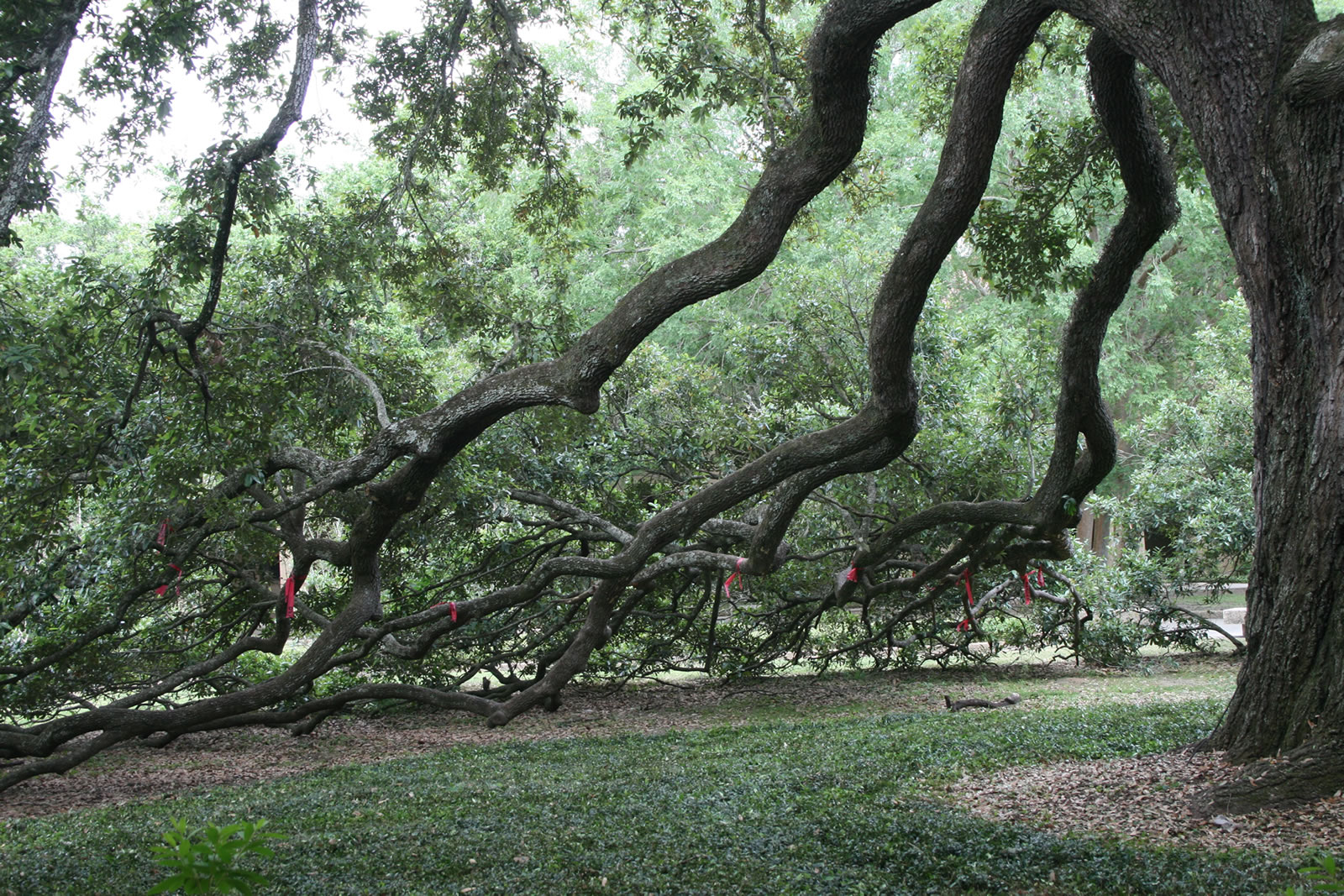
The salient feature of the LSU campus is the overarching presence of more than 1,300 southern live oak trees averaging more than 100 years of age. Special care was needed as they had to be protected and preserved. For the next 26 years I met this challenge with enthusiasm. Soil compaction and disturbance from urbanization had caused the decline of many of the oaks. With the help of many others and the benefit of recent relevant research, my team and I launched one of the most aggressive mulching programs in the country to biologically re-establish the natural ecosystem of the soil around the trees. Two hundred and fifty thousand cubic yards of whole tree mulch was placed beneath the oak trees during the next quarter century. This is what nature does by recycling leaves and twigs every year. Over this period, Southern University in Baton Rouge became one of the first schools in the nation to offer degree programs in Urban Forestry and I was the beneficiary of a reciprocal educational agreement between LSU and SU, receiving a MS in 2001 and a doctorate in 2011.
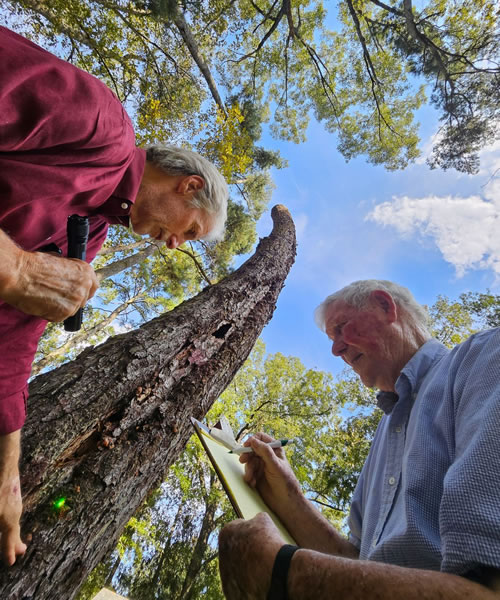
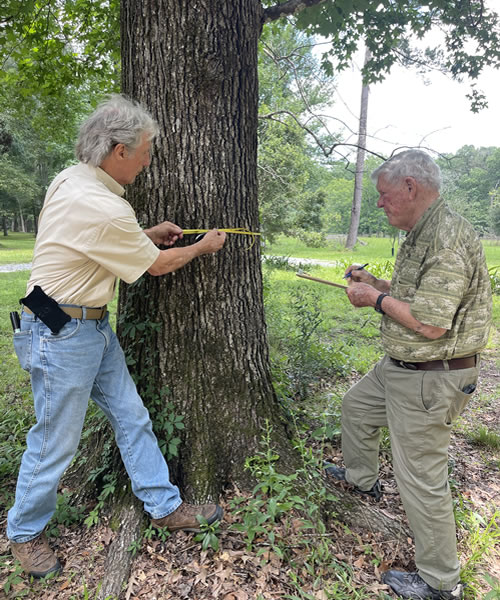
Importantly, I must give credit to my colleague Dr. Malcolm Guidry, who from the early days of my employment with LSU, stayed by my side till this day. 27 years and counting we have worked together and resolved challenge after challenge. His education, knowledge, and experience have been invaluable to me. He sets a splendid example by constant study and literature review and a curiosity and desire to obtain state of the art knowledge in all things arboricultural. It was his mentoring that encouraged me to expand my education and skills in Urban Forestry. Over the years I have assisted Dr. Guidry in performing discovery and forensic investigations, formulating opinions, and composing expert reports. Observing Dr. Guidry under deposition and in trial has been a rewarding and eventful experience.
View Dr. Malcolm Guidry’s CV (PDF)

In the study of one tree or several, wherever they stand or fall, I find they tell a fascinating story, and I am honored to tell it based on the facts of discovery.